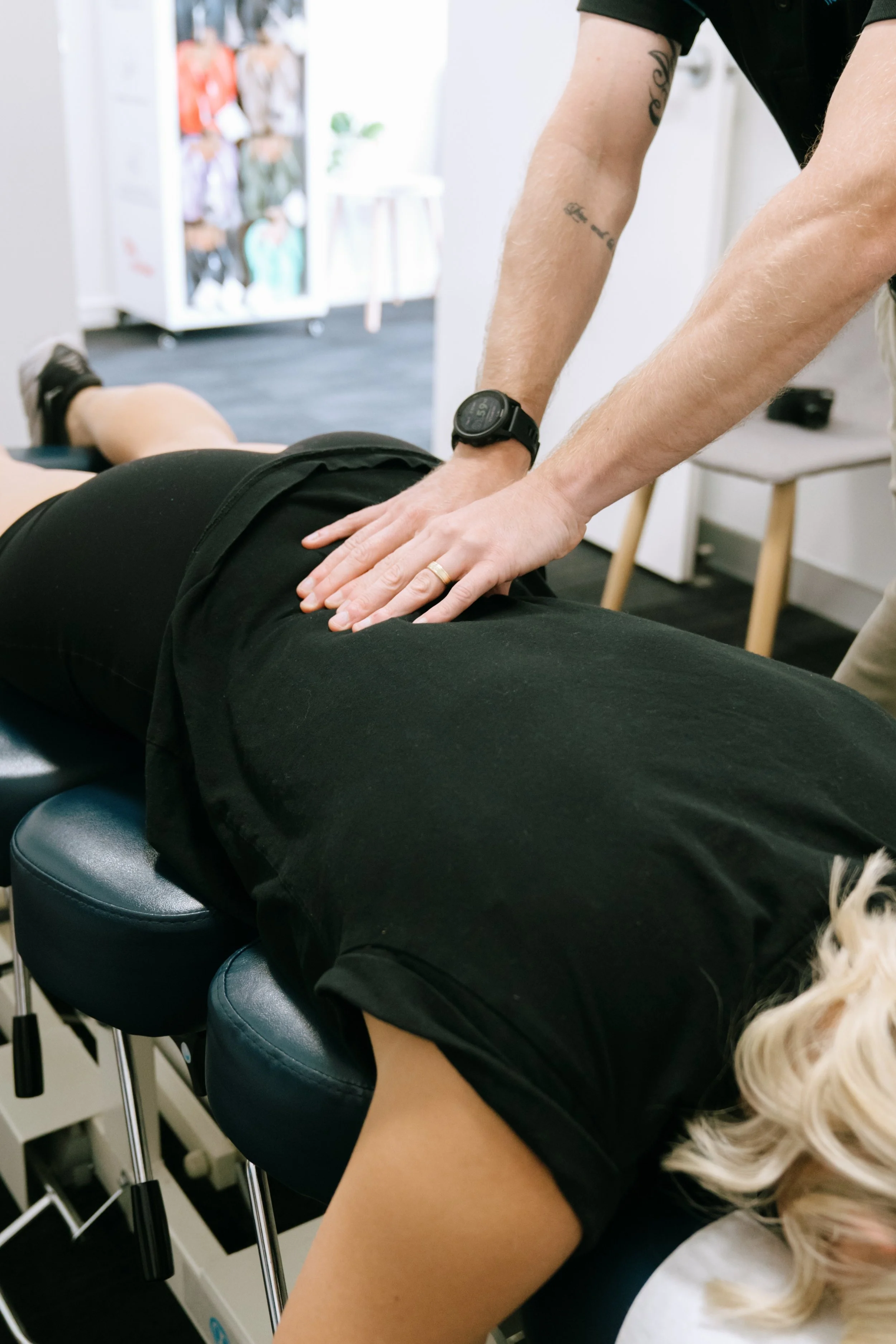
Sleeping With Pain? Try These Simple Position Changes
By Dr Kobi Kierath

Do you wake up with a sore shoulder, stiff lower back, aching hip or a tight neck?
Sometimes, the way you sleep can be part of the problem.
We spend around 7–9 hours in bed each night, often staying in a similar position for long periods. If an area of your body is already irritated or sensitive, putting pressure on it for several hours can make symptoms worse.
This doesn't mean your sleeping position is the cause of your pain. Instead, certain positions can place extra pressure or strain on areas that are already struggling.
The good news? A few simple changes to how you position yourself in bed may help.
Let's look at the three most common sleeping positions.
Back Sleepers
Sleeping on your back can be a comfortable position for many people because your body is supported evenly by the mattress. However, depending on your body and what's causing your pain, lying completely flat can sometimes make symptoms more noticeable.
Lower back pain
When lying flat on your back, your legs are straight and your pelvis may sit in a position that increases the natural curve of your lower back. For someone with an already irritated lower back — particularly if they are sensitive to prolonged extension — staying in this position for several hours may contribute to stiffness or discomfort.
Try this:
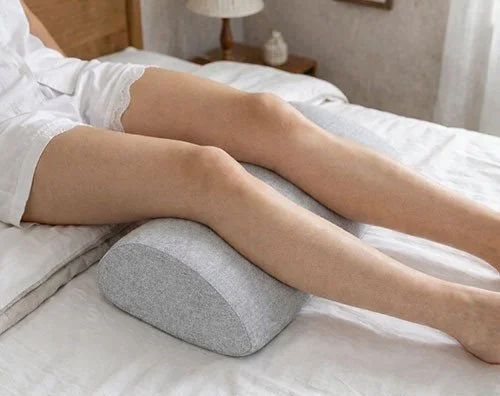
Place a pillow underneath your knees.
This slightly bends your hips and knees, which can reduce the amount of arch through your lower back and allow the surrounding muscles to relax.
It doesn't need to be a huge pillow. Even a small amount of support can make the position more comfortable.
If you find that your back feels better after making this change, it's a simple adjustment worth keeping.
What about hip pain?
Back sleeping can also be useful if you're experiencing pain on the outside of your hip.
For conditions such as Greater Trochanteric Pain Syndrome (GTPS), lying directly on the painful hip can compress the sensitive tissues around the outside of the hip. Sleeping on your back takes that direct pressure away from the area, while the pillow under your knees can help keep you comfortable in this position.
If you have both lower back and outer hip pain, this can be a particularly comfortable position to try.

Side Sleepers
Side sleeping is extremely common — but it can create a few different problems depending on which area is bothering you.
Shoulder pain
If you sleep directly on a painful shoulder, you're spending hours putting weight through an area that may already be irritated. You might notice that the shoulder feels fine during the day but becomes painful when you lie on it at night.
Try this:
Sleep on the opposite side and support your sore arm with a pillow.
You can also hug a pillow while sleeping. This gives your arm somewhere to rest and can reduce the amount of pressure placed through the shoulder. The aim isn't to force your shoulder into a particular position — it's simply to find a position where it isn't being compressed for hours at a time.
Outside of the Hip & ITB Pain
If you've ever had pain around the outside of your hip, thigh or knee, you may notice that side sleeping can make things more uncomfortable.
One example is Greater Trochanteric Pain Syndrome (GTPS), which can cause pain and sensitivity around the outside of the hip. Lying directly on the painful side can put pressure on these sensitive tissues for hours at a time.
But even sleeping on your good side can sometimes contribute. As you sleep, your top leg can naturally fall forward and across your body. This moves your hip into a position called adduction, which can increase compression around the outside of the hip. For someone with GTPS, this can make an already sensitive hip more uncomfortable.
A similar position may also be relevant if you're experiencing ITB-related pain around the outside of your thigh or knee. While sleeping position isn't usually the cause of ITB pain — training load, running volume and movement patterns are generally more important — reducing prolonged stress on an irritated area can still be helpful.
A simple adjustment
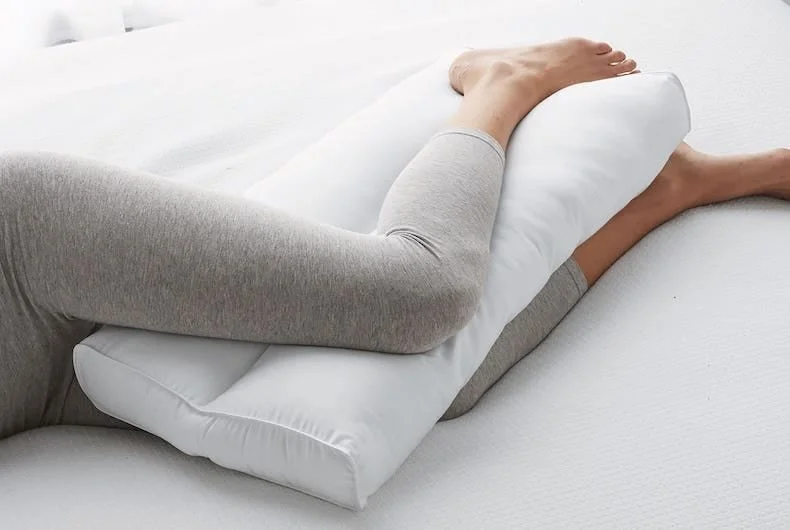
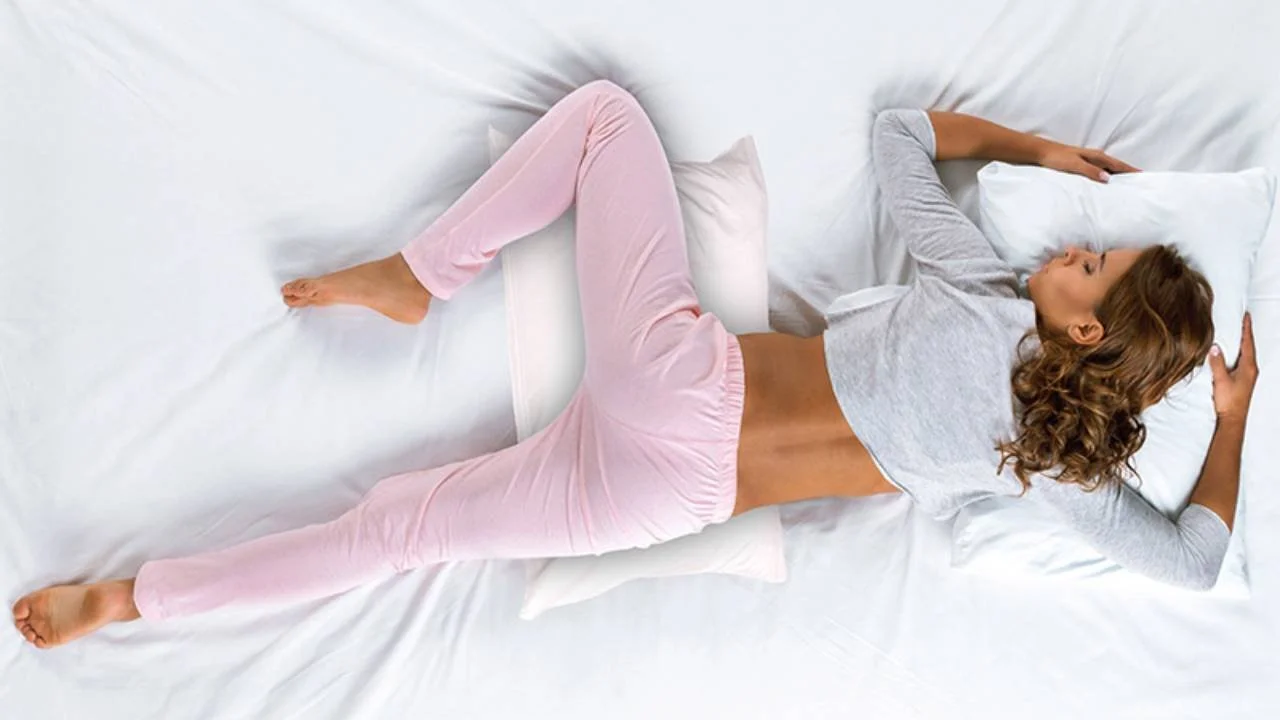
Try placing a pillow between your knees.
Rather than letting your top leg fall forward, the pillow gives it support and helps keep your hip in a more comfortable position throughout the night. You don't need to hold your legs perfectly still — the goal is simply to reduce the amount of time your hip spends in a position that may be aggravating your symptoms.
If lying on either side is uncomfortable, you can also try sleeping on your back with a pillow underneath your knees, as we discussed earlier. This takes pressure off the outside of the hip altogether and may be a more comfortable option while things settle.


Tummy Sleepers
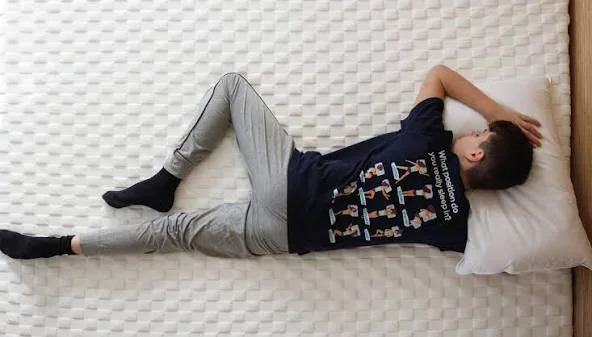
If you're a stomach sleeper, you might be wondering: "Is sleeping on my stomach actually bad?"
Not necessarily. If you sleep on your stomach and wake up feeling great, there's no need to panic and completely change your sleeping position. However, stomach sleeping can create a couple of challenges.
Neck pain and stiffness
When you sleep on your stomach, your head needs to turn to one side so you can breathe. That means your neck can remain rotated for a long period of time. For some people, this can contribute to waking up with a stiff or uncomfortable neck.
Try this:
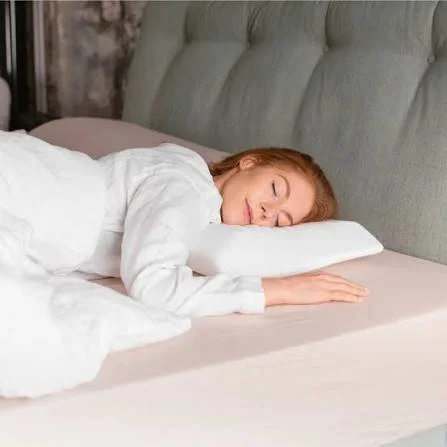
If you regularly wake up with neck pain, experiment with sleeping on your side or back instead. If you can't comfortably change positions, try using a lower, flatter pillow so your head isn't pushed into an awkward position.
Lower back pain
Stomach sleeping can also increase the amount of arch through your lower back. For someone who is already experiencing low back pain, spending hours in this position may make symptoms more noticeable.
Try this:
If you can't get comfortable in another position, try placing a thin pillow underneath your hips or lower stomach. This can provide some support and reduce the amount your lower back sags into extension. However, if you regularly wake up with lower back pain, it may be worth experimenting with side or back sleeping to see whether your symptoms improve.
So, What's the "Best" Sleeping Position?
The answer is: There isn't one.
The best sleeping position is the one that allows you to sleep comfortably without consistently aggravating your symptoms. Your ideal position may also change depending on what's going on with your body.
Sore shoulder?
👉 Try sleeping on the opposite side and supporting your arm.
Pain on the outside of your hip?
👉 Avoid lying directly on the painful side and try a pillow between your knees.
Lower back pain?
👉 Try a pillow underneath your knees when sleeping on your back or between your knees when sleeping on your side.
Neck pain?
👉 Experiment with side or back sleeping and check that your pillow isn't pushing your head too far forward or sideways.
ITB pain?
👉 Support your top leg with a pillow if side sleeping is aggravating your symptoms.
These changes aren't about achieving "perfect posture."
They're about reducing unnecessary pressure on an area that is already irritated.
What If Changing Your Sleeping Position Doesn't Help?
This is the important part.
If you've changed your sleeping position, added pillows and tried to avoid aggravating positions — but you're still waking up sore every morning — your sleeping position may not be the whole story.
Pain can be influenced by a combination of factors, including:
Training or exercise load
Muscle strength and control
Joint mobility
Previous injuries
Work and sitting habits
Repetitive movements
Recovery and sleep quality
How long you've had the problem
In other words, changing your sleeping position may help reduce irritation, but it doesn't necessarily address why the problem started in the first place.
If pain has been hanging around for weeks or months, your body may need more than a different pillow or sleeping position. That's where an individual assessment can help.
Don't Just Put Up With It
If you're consistently waking up with the same pain, struggling to get comfortable at night, or finding that pain is affecting your exercise and daily activities, it's worth getting it assessed.
At Lakelands Health & Performance, we can assess what's contributing to your symptoms, identify the movements or positions that may be aggravating the problem, and develop a plan to help you get back to moving comfortably.
Sometimes the solution really is as simple as changing how you sleep. And sometimes, your sleeping position is just one piece of a much bigger puzzle.
If your pain keeps coming back, don't just keep changing pillows — let’s get to the bottom of it! - Dr Kobi